
Desert (Google)
- a dry, barren area of land, especially one covered with sand, that is characteristically desolate, waterless, and without vegetation.
- Synonyms: wasteland, wastes, wilderness, wilds, barren land, dust bowl
- a situation or area considered dull and uninteresting
Desert (Actual)
- a dry area of land, especially one covered with sand, that is characteristically isolated, waterless and rich in life and soul
- a surreal area of majesty and supreme interest
This world is an endless expanse of distractions. We are constantly engaged with people, at the office, at home and then even when we are alone our phones serve as an unbreakable bond to the rest of humankind. We strive for peace, not just for our body but for our souls too. These simple treasures elude us. No matter where we hide, this world of distraction hunts us down. But there is a place on earth where distractions dare not venture: The Namib Desert.
The harsh landscape banishes the normally powerful cell phone networks. The desert’s negative connotations deter all but the most adventurous travellers. Limited and tough access roads keep the constant hum of Diesel engines to a minimum. And with just 2 people per square kilometer, peace and quiet will find you.
Namibia is one of the driest countries on earth, with almost no perennial rivers and extremely sparse rainfall. The Namib and Kalahari deserts dominate the lion’s share of Namibia’s land. But in spite of this, an abundance of flora and fauna have adapted to thrive in this inhospitable land. Walk into a small depression in the sand and even as a novice, you will be able to identify more than ten different plant species. Study the surface and you will find the spoor of antelope, jackal, zebra, hyena, elephant, rhino and even lion. Some are rare but others start to characterize the landscape.
Like most of Africa, Namibia’s modern history is defined by its colonial past. But unlike most of Africa, Namibians don’t have the usual qualms and residual issues associated with colonialism. The Germans colonized Namibia in the 1880s but were ousted after the First World War, after which Namibia was administered by South Africa. And while South Africa has one of the harshest post colonialism legacies, it seems that to a large extent Namibians were spared.
Namibia today is a magical country with a perfect blend of nature, culture and modern civilization. Bustling towns are juxtaposed with sprawling desert sands; the icy Benguela with rich sea life and tame livestock with roaring wildlife. The rest of this blog presents a south-to-north travel itinerary. It is not an all inclusive tour but a personal guide of a short highlights route.
Namibia, unlike Europe and much like the rest of Africa, is best done on a self drive tour. However unlike the rest of Africa, a vehicle equipped for an exploratory expedition is not required. In fact a little rental hatchback will get you most of the way. Besides, a rental vehicle is by far the best off road vehicle available! But for a comfortable and adventurous trip, a capable soft roader, or better, is recommended. A tyre repair and recovery kit is advisable but not a necessity. Driving at 100kmph on a smooth dirt road can be a lot of fun but also treacherous. Keep the rally driver inside at bay!
The route is as follows: The Fish River Canyon, Lüderitz, Sossusvlei, Swakopmund, Etosha and Windhoek. In truth this is just a ‘highlights’ package. To truly experience Namibia will require an extensive and comprehensive visit. The more remote locations need detailed planning and more competent gear but they often deliver the most special experiences. That is for another day though!
The starting attraction in the south… The magnificent Fish River Canyon. I struggled to find good advice on the web about how to visit this gash in the desert. Herewith is my expert and qualified advice.
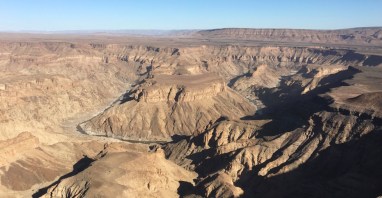
Ai-Ais is at the southern lower section of the canyon and Hobas is at the northern top. By the way; top and bottom does not refer to North and South. That would be geographically incorrect, ambiguous and rather silly. No, ‘top’ refers to the actual roof of the canyon and ‘bottom’ to the floor. In Hobas you can gaze into the breathtaking ravines from numerous vantage points, while at Ai-Ais you are enclosed by the opposing faces of the canyon. The canyon is less spectacular at Ai-Ais but it does offer the option to freely hike into the canyon floor. The true canyon hike begins in Hobas though. It is a 5 day hike ending at Ai-Ais and requires a permit. My advice is to spend 2 days in the Canyon; one at Ai-Ais for the hike and another at Hobas for the views.
My excitement bubbles over to present to you this next piece. Blyde verse Grand verse Fish! If size did not matter, it would not have been the subject of so much debate. This, more so in the case of landmarks around the world; the tallest building, the longest river, the highest mountain and also the largest canyon. And if for no other reason than to just categorize these… Size matters! It can even add to beauty. Staring out over a massive gaping gash in the earth is a hair raising experience, regardless of how barren the void is. So with that as an introduction, I present my take on the matter.
One would think that size is an objective measure. It turns out though that when it comes to canyons this is not exactly true. In fact the size of a canyon depends entirely on how it is defined. If a valley between two mountains is considered a canyon then even the Grand Canyon is dwarfed by some of these in the Himalayas. However, confining the definition of a canyon to an eroded channel in the earth removes some ambiguity and subjectivity. And here, with only three canyons to consider, it’s a simple task. So here are the facts:
The Grand Canyon, located in Arizona, is on average 800m deep, between 6 and 29 km wide and 446 km in length. It was formed by the Colorado River and is without a doubt the largest of the three. The Fish River Canyon, named after the river that runs through it, is 160 km long, averages 600 m in depth and gets up to 27 km wide at places. The canyon, situated in the southern portion of Namibia, receives almost no rain and the Fish River consists of stagnant pools for most of the year making it the driest canyon in the world. South Africa’s Blyde River canyon is dwarfed by the other two. It is a mere 25 km long and averages about 750m in depth. It is however a beautifully green Canyon, if not the largest green Canyon in the world.
So why all this hype about size? Well, it seems that the three canyons have decided amongst themselves that they are the largest in the world. These dubious claims are subjective at best. Try googling “largest canyons in the world” and you would be surprised at the elusiveness of the answer. Not only is the definition of a canyon debatable but so is the manner in which it is quantified. There is the widest canyon, the widest canyon on average, the deepest canyon, the deepest canyon on average, the deepest canyon from absolute bottom to absolute top and so many more. With this lack of scientific measurement it is a futile exercise to quantify a canyon. It is my opinion that these are not the three largest canyons in the world. What they do have in common though, is their high tourist appeal, often leading visitors to weigh them up against each other. And having visited all three, I feel obliged to give my subjective opinion. Comparing them is more than just a dimensional exercise. It is also about the holistic experience of the three canyons.
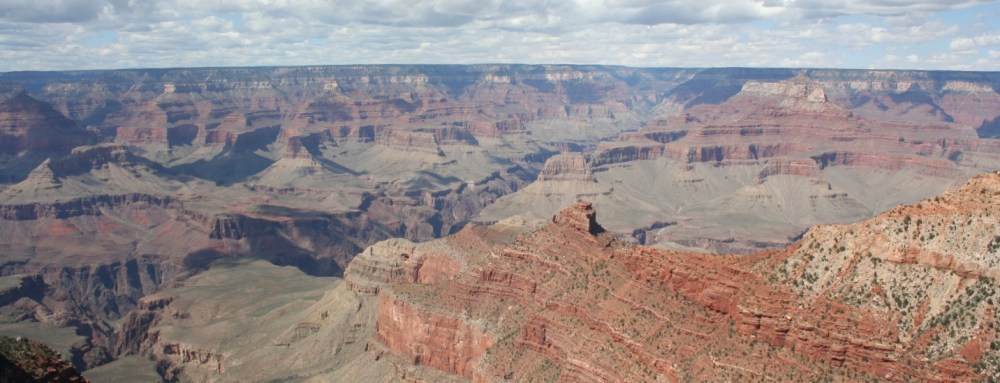 The Grand Canyon is highly commercial. This, in staying true to American popular cluture! The infrastructure, including lodging and services, is first class. The access routes to and around the canyon are well developed, including an efficient public transport system. There are also the over the top offerings such as helicopter flights and the skywalk. All these make for a fulfilling all-round canyon experience. And it may seem that the ‘wild’ has been beaten out of the Grand Canyon, however, every effort has been made to preserve its purity. In fact, it’s one of the few places left where wild Californian Condors can be found. Then, there are the sunsets. Wow! African sunsets are legendary and not just for the view but for the whole experience, including sights and sounds. But this North American counterpart is right up there. And sticking with that commercial tradition, it attracts hundreds of viewers daily. Besides the beauty of it, it is a humbling sight that will leave the loudest of us speechless. Finally, the vastness of the Grand Canyon is breathtaking. Flying out in a helicopter over the edge of the void will leave time standing still. This is a truly Grand gorge.
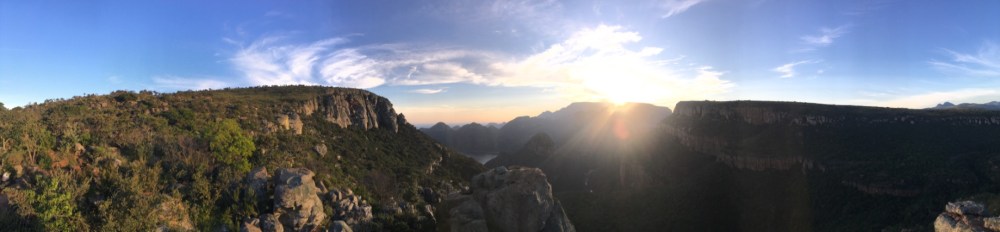
The Blyde River canyon forms part of the great escarpment which encompasses much of Southern Africa. The eastern portion of the escarpment is littered with geologically striking features, of which the canyon is just one. However, the tectonic movements that formed the escapement have created unique micro features within the canyon itself. These include the Three Rondawels and Bourke’s Luck Potholes. The uniqueness of its formation and its subtropical location give the Blyde River Canyon quite a distinct appearance. During the green summer months, its beauty is dazzling. And all along, the brave explorer is rewarded with stunning precipitous views. One of these, the ledge that sticks out over the cliff at the Three Rondawels viewpoint, is a tourist favourite. The Blyde River Canyon is more freely accessible to the general public on both the eastern and western rims than the more commercial Grand. Many of the viewpoints are just a “short left” from the main road. While the canyon is within a provincial reserve, there are private resorts located on both rims offering many of the services available at her North American counterpart. Now the sunset at the Grand Canyon is beautiful, but it’s the wonder of the sunrise that takes center stage at Blyde. The kaleidoscope of colors on the rock faces as the sun makes its ascent over the eastern rim is magical. Finally, the relatively small scale of the Blyde makes it less intimidating to comprehend and explore, albeit among some of Africa’s most dangerous wildlife. It is a tiny paradise with all its glory within easy reach.
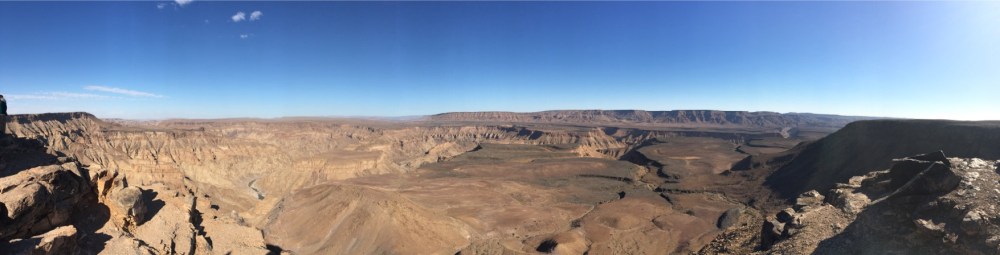
The Fish River canyon is as remote as it is dry. If the Grand is commercial and tamed then the Fish is wild and unbroken. No tarred roads have made their way there and except for a few gravel roads, it is mostly only accessible by foot. And that is on the eastern rim. The western rim, for the best part, has been left just as nature designed it. It is this untouched nature of the canyon that gives it character and true beauty. You could drive your car off the edge if you wanted and no one would see you let alone try to stop you. You could encounter a leopard within the canyon and have to face it with nothing but your sense of survival. You could find spots around crevices where even the birds search for peace and the silence is deafening. The Fish River canyon is a haven for the true adventurer and it is best experienced as such. The five day hike between Hobas and Ai-Ais is pilgrimage for many Southern African adventurers. When paraded against the other two, the Fish responds with a shrug and then bathes in her quaint, yet feral majesty.
This is supposed to be a blog about Namibia right? My profuse apologies, that was a strange but relevant tangent. Over to the next destination then! The Sperrgebiet, German for forbidden area, is a 320 by 70 Km narrow strip of land along Namibia’s west coast running North from the mouth of the Orange River. Diamonds were discovered near Lüderitz in 1908 and the German colonialists, fearing piracy of the land, decided to zone off this potentially rich strip of land. Today, the Sperrgebiet is a national park but is still a prohibited area. In essence, the area’s status as a national park will ensure that it is preserved for future generations to come and explore it, just that they won’t be allowed to enter. Weird! That is of course is until all the diamonds have been extracted. Nonetheless, the Namib desert itself still does most of the policing of this No-Go zone. The harsh dry climate limits both rogue explorers and large scale miners alike. However Lüderitz is still a beautiful and accessible town in the heart of the Sperrgebiet, from where both the diamond rush history and German colonial style architecture can be explored. Highlights in Lüderitz include the Kolmanskop ghost town and Felsenkirche, but one of the town’s true diamonds is the bay of Lüderitz. It is in stark contrast to the seemingly lifeless coastlands.
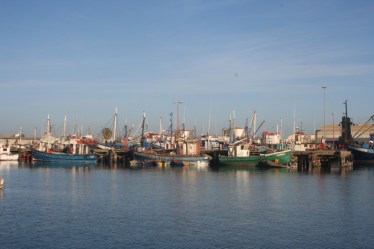
The bay abounds with Benguela dolphins, Cape fur seals, penguins, flamingos, four types of cormorant, other sea faring birds, sharks and numerous other species of fish. The bay is shielded from the rough Atlantic seas as well as the fog that normally plagues the skeleton coast, so a cruise around the bay is a fulfilling experience and the highlight of any visit to Lüderitz.
Heading north! If Lüderitz offers the desert town experience then Sossusvlei delivers the actual desert experience. This section of the Namib desert contains a vast forest of massive red sand dunes. So large and high that it boggles the mind! However, Sossusvlei itself is more than just a field of towering sand dunes. The ephemeral Tsauchab River, on the rare occasion that it does flow, drains into this magnificent vlei (pan in Afrikaans). For the rest of the time the pan is a flat white expanse surrounded by bloody dunes. This red-and-white, flat-and-steep contrast is a visual masterpiece. Together, the dunes and Vlei have been involved in a slow romantic dance over the generations that has constantly changed the look of Sossusvlei. Most recently (approximately 300 years ago), a portion of the Vlei was closed off from the Tsauchab by a stray dune, creating in the process the surreal Deadvlei.
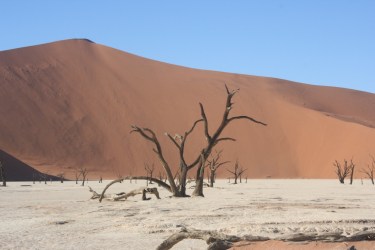
Roaming on the Deadvlei is like exploring the surface of Mars. The frozen camel thorn trees inside Deadvlei serve as a ghostly reminder of the delicate balance of life within the Namib. The views from the summits of Big Daddy and Big Momma are stunning, both of the Vlei and the surrounding dunes. These red giants stand like sentinels over the Vlei and when when viewed in unison, the effect is magical. Most astonishingly though is the diversity of life that has managed to thrive here. Desert jackal, Springbok, Ostrich, Gemsbok, insects, lizards and other birds! All of which have carved out a thriving existence in this presumably desolate land. The ineffable beauty of Sossusvlei is one of planet earth’s miracles. No amount of time is enough to spend in this wonder and you will find yourself yearning to return over and over again.
Lüderitz has already been given the title of the desert town, however the truth is that most towns in Namibia are of the desert variety. But not all are defined by the desert. Many have a character etched by their history, architecture and people that transcend their barren location. Heading north and back to the coast, the town of Swakopmund is prime example of a place that is more than just the surrounding dunes and Namib. The character of Swakopmund is one of a charming German style town that you would expect to find hidden in the Rhine Valley. Swakopmund is host to Namibia’s most exciting adventures, it’s finest dining, it’s most beautiful architecture and the great Atlantic mist. This section of the Namib is less spectacular than Sossusvlei but its proximity to well developed infrastructure means that it is more accessible to adventurers. And the offerings are extensive; from quiet desert drives to roaring dune bike rides to adrenaline infused sky diving. 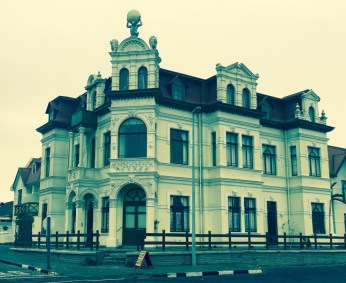 Foodies will find paradise in Swakopmund. It is well accepted that Namibia’s finest cuisine resides here. Dinner reservations, even at some of the average restaurants, are tough to get and this during off-peak periods. Proactiveness is critical! There are selections for every diet; traditional German dishes and beer, Atlantic seafood and authentic African game steaks. Wandering around Swakopmund is like strolling through the late 19th century. The old German style architecture is still beautifully apparent. The town center has persisted with this theme while modernism has been expelled to the outskirts. Here, secluded on Southern Africa’s skeleton coast, lies one of the continents gems.
Few would argue that Africa is blessed with the world’s most awe-inspiring game parks. From the large open plains of the Serengeti in Tanzania to the massive migration of the Masai Mara in Kenya! From Botswana’s wild Chobe to Zimbabwe’s Hwange and finally to South Africa’s diverse Kruger! But there is another that not only challenges these big 5; but on pure uniqueness of experience, it trumps them… That is Namibia’s Etosha. It’s unimaginable that a massive dry salt pan in the county’s northern interior can play host to so much diverse wildlife. A visit to this great white expanse will turn imagination into exhilarating reality. 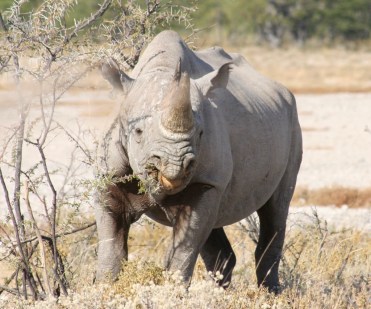 Unlike many other African reserves, where game must be arduously sought out, sometimes through endless hours of driving, in Etosha the game come to you. All of the park’s camps are set around watering holes, some natural and some artificial. Game have used the natural ones for eons and even today they are frequented by animals, almost instinctively. A stay inside one of these camps is essential for a fulfilling visit to Etosha. No time will be enough as you never know what the day may hold but nothing less than two days is my advice. Drives through the parks are great but nothing compares to an evening at a water hole and the one at the Okaukuejo camp is my favourite. There is no better way to describe the marvel of Etosha than to give you an extract of my actual experience:
“We returned from a long hot drive through the dusty roads of the pan. Wearily, after hours of unsuccessful big-cat searching, we showered, ate and settled in for the evening. The African sunset had completed its spectacle over the western horizon and a chill started to fill the air. 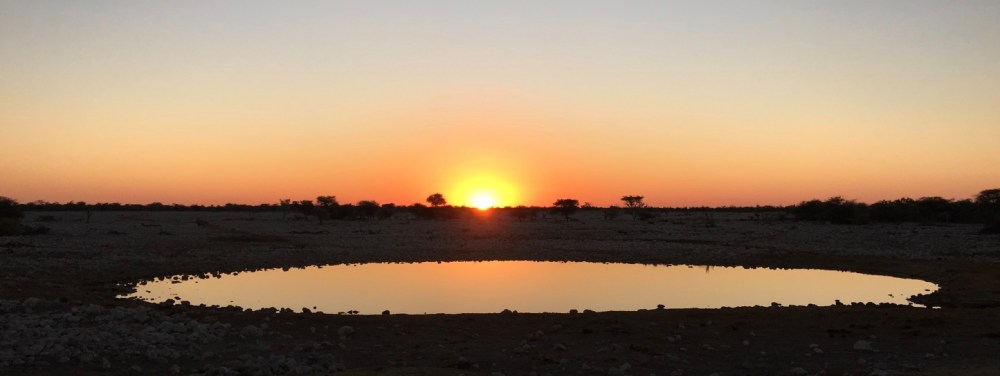 On a whim, we decided to cover up with blankets, grab a bottle of red wine and settle in on a bench facing the Okaukuejo waterhole to enjoy our final Etosha evening. Compared to the previous evening, the waterhole was exceptionally quiet. The silence, coupled with the glare of the full moon was spooky. It seemed that the hustle and bustle of wildlife had somehow been frightened off. However not too long into the first glass of Merlot, did the evening’s first visitors make an appearance. A large female black rhino followed by her calf! Watching the two reminded me of the peril that these African giants face for their very survival as a species. A few sips later and the waterhole was abuzz with the addition of three more black rhino, presumably males. The ‘buzz’ was created by the two sparring males that broke the silence of the night with their grunts and the forces of their mock charges. All this nonsense seemed to irk the mother and not much later, the pair moved off. The exit of the lady and child did not deter the males from their competition of dominance, and the snorting and dust raising continued.
Suddenly the two males seized their battle dance and the third rhino, who had a thirst to quench, lifted his mouth from the water and stood nervously still while out of the south, a pale lithe figure approached the waterhole, silently and secretly. The few whispers that could still be heard at the amphitheater immediately fell away. I was the first to spot the lioness as she made her way cautiously to the northern bank of the pond. The rhinos, obviously aware of the predator, were still suspended in stillness. They seemed unsure as to the size or location of the threat. The lioness, after every few sips of the precious fluid, kept turning back to the direction from which she came. And while the arrival of the rest of the pride was less of a surprise, the fascination it created was tangible. First to join the lone lioness was her female kin. Their approach was equally as silent and secret and every effort was made to avoid the apprehensive rhinos. The arrival of the king was anything but cautious. One particular rhino found himself in the middle of the maned cat’s path and he was not going to receive the same courtesy given by the lionesses and the first of many standoffs ensued. A massive male African Lion dwarfed by a solitary Black Rhinoceros! The lion, realizing that he was outmuscled, skirted around the agitated rhino and joined his pride at the water’s edge. This brave rhino would soon pay for his arrogance.
The water, not only quenched their feline thirst, but emboldened the lions. The initial standoff was a mere appetizer; for it is one thing to see a male lion stand his ground against a rhino, but it is an entirely different spectacle to see a pride of lionesses taunt the giant in unison. And so it started, lions in their numbers against a singled-out male rhino. The other two rhinos had quietly made their way to the opposite end of the waterhole, seemingly unnoticed by the pride. The lions would circle the lone rhino and slowly taunt his blindside. The rhino, with his poor eyesight, would turn to the direction where he perceived the threat to emanate from and charge with his menacing horn ready to impale any inattentive cat. His charges were so explosive that the scattering of boulders in his path could be heard from a hundred meters away. This scene proceeded to play out for the next hour. Stalking lions and an agitated black rhino. Eventually the taunting lions were reduced to just three females, while the rest of the pride settled down for some R&R along with the lazy male under a tree next to the game path.
In the meantime the crowd at the Okaukuejo amphitheater had filled up to beyond capacity. Camera flashes lit up the night sky from every corner. But a few of us realized that the scene playing out before us was beyond capturing a moment to share on social media or with friends. It was a gift from heaven, to be enjoyed by being immersed in the experience. To witness some of Africa’s greatest beasts in a battle of superiority is truly epic and no picture would do justice. And with that realization we dug in, nerves on end, to see the contest unfold. It was at the same time that I realized that my wine had remained untouched for the last hour. Okay so “dig in and watch” but with a few more sips of the ‘other’ precious fluid.
The silhouette of Africa’s true king was the first clue of his arrival to the stage. The African Elephant, so distinct in his appearance and size, is as graceful as he is menacing. This other giant approached from the south-west on a path that would eventually intersect the resting pride. I had thought that a second standoff would ensue but that was a silly error, for even a large pride of lions headed by a formidable male, would not dare challenge the authority of an elephant. And while the elephant seemed to hesitate before the pride of lions in his path, the scattering of little cats was astonishing. Provoking a one tonne rhino is a brave act but trying the same with a six tonne elephant is suicide. The real king then acknowledged the courtesy and proceeded to his destination at the northern end of the waterhole. Now while the lions were emboldened by their numbers, the arrival of this new giant seemed to have the same effect on the rhinos. For suddenly the two undercover rhinos, who had somehow eluded the lions, found a new confidence to drink contently and grunt away; all in the shadow of the elephant. Unfortunately, the harassed rhino found no such relief because once the elephant no longer posed a threat, the lions resumed their taunts.
So, for the next hour, the lions beleaguered the lone rhino in some sort of tag team effort; the two other rhinos continued to play with their new found confidence in hand and the elephant proceeded with his merry routine unperturbed by the happenings around him. As the night wore on, I started to contemplate the plight of the lone rhino. This stalk and charge dance between the two species seemed to be locked in a stalemate. Did the lions actually intend to attack and kill the rhino? Why did the rhino not make an attempt at flight or even to find solace under the elephant’s shadow? I came to the conclusion that this Lone Ranger was actually thriving in this primal contest. It was as if he was saying: “come on, bring it on and I’ll give you something to remember for every rhinoceros across Africa that was ever threatened by a lion.” I came to the conclusion that this was just a game for the lions and that there was no intention of actually attacking the bull. In fact if any of the two animals was in danger, it was probably the lion.
The night ended quite dramatically with the appearance of two giraffe. Similarly to the elephant, the first sign of their approach was their moonlit silhouette. However dissimilar to the elephant was their extremely hesitant approach. Coming in from the south west, they stopped short just as they exited the tree line, as if sensing the peril of the ungulate. Drawn by thirst, they made a second cautious approach before checking once again. This time though they were spotted by the pride. The lions turned all their attention away from the futile battle with the giant and focused solely on these larger but far less imposing animals. The giraffes’ discretion proved valuable in buying them a head start; for once they sensed the approaching danger they were able to bolt into the safety of the tree line. This did not deter the lions from a hot pursuit. Thirsts quenched and appetites whetted, the females went off in the direction of the fleeing animals. The male lion, in all his lordship, slowly awoke from his rest, stretched dramatically and then trotted gently in the direction of his subjects.
We did not see the conclusion to this final installment, but we did hear a loud squeal of some poor soul supposedly in a feline death grip. I’d like to think that the giraffes made good their escape but the wild side of me has imprinted an image in my mind of the lions taking down one of those towering giants. The exit of the pride made no evident difference to the animals at the watering hole. The elephant and his two protectorates played on and the solitary male rhino stood guard against an imaginary foe. In fact he even mock charged a bird at some point. I love that this experience ended in such a mysterious way. The eerie abandoned look of the water hole earlier now made sense. Somehow the Savannah had sensed the impending danger and sought refuge elsewhere. The waterhole remained unused by Africa’s lesser creatures till late the next morning. Those of us privileged enough to witness this spectacle awoke groggily to the now quiet waterhole which we knew played host to a once-in-a-lifetime experience and the nostalgic euphoria returned.”
Heading back South and out is the final stop on this Namibian journey. Windhoek is to Namibia what Johannesburg is to South Africa. It is by no means the sexiest or most charming city but it is where the action happens. No Namibian tour is complete without a stop in Windhoek. In fact it is tough not to just end up passing through. Like Joburg, all roads lead to Windhoek and for fly-in guests, it is normally the port of entry. And lastly, Windhoek is geographically in the center of the country so bypassing it is not only difficult but it will leave a gaping hole in your holiday. Here true Namibian and African culture can be experienced. There are traditional markets and numerous landmarks to visit. The variety of options are wider and even the holiday shopper can really get down to business. If only to stock up on gifts for the family back home! Windhoek is small enough to be peaceful but large enough to reacclimatise a peaceful traveler to the hubbub of home.
In conclusion I would like to mention three things about our North Western neighbors in comparison to South Africa. First, Namibians are much prouder of their nation than we as South Africans are of ours. 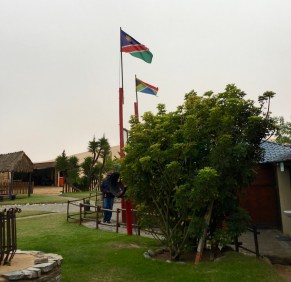 And this, in spite of their economy being so closely tied with South Africa’s. Then, the cleanliness of the country made an impression on me. This, even in the poor townships. I suppose that this has a lot to do with my first point about their national pride. Finally, Namibians are culturally and racially far more tolerant than South Africans, in spite of their equally colorful past.
As South Africans we want to model our country around those powerful western countries. And this is great because they have a model that works. But this is a model based on centuries of development. It is a model into which they grew and not one that was imposed on them. We do not have the luxury of time to grow into a model that works for us so adopting a proven model is a necessity. However, Europe and North America are not the only sources of this perfect model. In fact, right here in Africa are great systems that are proving effective. I am by no means saying that we should adopt these models in their entirety. What I am saying is that there are portions of these models that can help solve our own issues. Would it not be great to meet a colleague in the mall and have a positive discussion about our great nation, rather than constantly focusing on our flaws. Would it not be inspiring if we walked around our cities without having to see and smell the litter that often lines our streets? Would our lives not be more fulfilled if we just tolerated and even embraced, our diversity. Our little brothers are excelling at it, right under our noses.
Namibia captivated my soul. It is the first country I’ve visited where I would consider living, other than my beloved South Africa. All the superlatives in the world do not suffice but three words always come to the fore: Peaceful, Surreal and Majestic!
Below is my actual itinerary for my trip. I have hyperlinked some of my Namibian TripAdvisor reviews to assist with lodging, dining and adventure decisions. I hope it helps!
Itinerary
Day 1 – 9 June
- 06:00 – Travel from Joburg to Upington – 781km 8 hours
- 16:00 – Arrive and check in
- Visit Orange River Cellars
- Dinner at BiLo’s
- Stay in Upington at the Abbiamo Guest house (Meals excluded)
Day 2 – 10 June
- 07:00 – Travel from Upington to Ai Ais – 416km 4 hours
- 08:30 – Arrive at Ariamsvlei border post
- 10:30 – Continue to Ai-Ais
- 13:00 – Arrive and check in
- 14:00 – Shop for supplies
- 16:30 – Watch the sunset from a viewpoint
- Stay in Ais-Ais at the Ai-Ais Hot Springs Resort (Meals excluded)
Day 3 – 11 June
- Explore the canyon (Hiking)
- Stay in Ais-Ais at the Ai-Ais Hot Springs Resort
Day 4 – 12 June
- 07:30 – Travel from Ais-Ais to Luderitz – 463kms 6.5 hours
- 09:00 – Stop at Hobas viewpoint
- 14:00 – Arrive and check in
- 15:00 – Visit the Felsenkirche
- Stay in Luderitz at the Nest Hotel (Breakfast included)
Day 5 – 13 June
- 07:00 – Breakfast at hotel
- 08:00 – Boat ride with Zeepaard boat cruises. R400 per person
- 11:00 – Kolmanskop Ghost town. R85 per per person and R230 photo permit.
- 13:00 – Lunch at Ritzi’s
- 14:00 – Drive around Diaz point
- 18:00 – Dinner at the Penguin restaurant
- Stay in Luderitz at the Nest Hotel
Day 6 – 14 June
- 07:00 – Breakfast at hotel
- 08:00 – Travel from Luderitz to Sossusvlei – 467km 6 hours
- 14:30 – Arrive and check in
- 17:30 – Sundowner drive – R225 per person
- Stay in Sossusvlei at the Namib Naukluft lodge (Breakfast included)
Day 7 – 15 June
- 04:30 – Breakfast at hotel
- 05:00 – Travel to Sessriem
- 06:00 – Enter the Nauklfut park to visit Sossusvlei and Dune 45
- 13:00 – Lunch in Sessriem
- 14:00 – Return to the lodge
- Stay in Sossusvlei at the Namib Naukluft lodge
Day 8 – 16 June
- 07:00 – Breakfast at hotel
- 08:30 – Travel from Sossusvlei to Swakopmund – 368km 4.5 hours
- 13:30 – Arrive and check in
- Dinner at Jetty 1905
- Stay in Swakopmund at the Hotel Zum Kaiser (Breakfast included)
Day 9 – 17 June
- Sightseeing
- Quad bike tours
- Brunch at the Farmhouse Deli
- Dinner at the Tug
- Stay in Swakopmund at the Hotel Zum Kaiser
Day 10 – 18 June
- Sightseeing
- Sky diving
- Lunch at the Swakopmund Brauhaus
- Desert tour with Openspace tours
- Stay in Swakopmund at the Hotel Zum Kaiser
Day 11 – 19 June
- Travel from Swakopmund to Windhoek – 353km 3.5 hours
- Explore Windhoek
- Dinner at Joe’s Beer House
- Stay in Windhoek at the Safari Court hotel (Breakfast included)
Day 12 – 20 June
- Travel from Windhoek to Etosha National Park – 415km 5.5 hours
- 10km before Otjiwarango visit Okonjima cheetah reserve AfriCat
- Stay at Etosha national park at Okaukuejo Camp Waterhole Chalet (Breakfast included)
Day 13 – 21 June
- Game viewing
- Stay at Etosha national park at Okaukuejo Camp Waterhole Chalet
Day 14 – 22 June
- Travel from Etosha national park to Windhoek – 415km 5.5 hours
- Stay in Windhoek at the Olive Grove Guesthouse (Breakfast included)
Day 15 – 23 June
- 07:00 – Breakfast at hotel
- 08:00 – Travel from Windhoek to Kang (Botswana) – 707km 7 hours
- Stay in Kang at the Kang Ultra Stop
Day 16 – 24 June
- 09:00 – Travel from Kang to Joburg – 429km 5 hours
 Rootsquire by Shaldon Naicker